
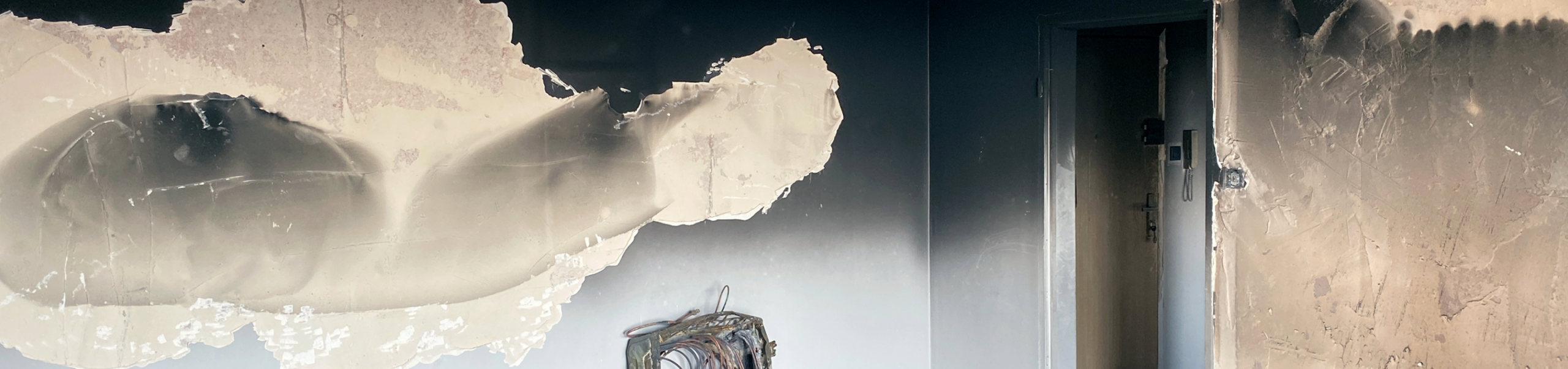

Smoke and soot are both common byproducts of a fire, but they can affect properties in different ways. Understanding these differences is essential for accurately assessing fire damage, identifying potential hazards and determining the full extent of a loss.
What is smoke and how does it cause damage?
According to the 2024 edition of NFPA 921, Section 3.3.181, smoke is defined as airborne solid and liquid particulates and gases produced when a material undergoes pyrolysis or combustion, combined with the air mixed into that mass.
During a fire, smoke can spread rapidly throughout a property, reaching areas untouched by flames. It can penetrate wall cavities, insulation, ductwork and electrical systems, potentially causing damage well beyond the immediate area of the fire.
Common indicators of smoke damage include discoloration on walls and ceilings, persistent odors and corrosion on metal surfaces. Smoke exposure can also create indoor air quality concerns. Even relatively small fires can produce widespread smoke contamination, affecting areas that show no visible signs of flame damage.
What is soot and how does it cause damage?
According to the 2024 edition of NFPA 921, Section 3.3.185, soot consists of black carbon particles produced in a flame.
Soot forms during combustion and can accumulate as a residue on surfaces throughout a property. Depending on the materials burned and the conditions of the fire, soot deposits may contain compounds that contribute to staining, corrosion and other forms of deterioration.
Unlike smoke, which can travel through a building without leaving obvious visible evidence, soot often settles on walls, ceilings, furniture and personal belongings.
Soot contamination can continue to affect a property after a fire has been extinguished. If left unaddressed, residue may cause lasting damage to finishes, fabrics, electronics and HVAC components.
Smoke Damage vs. Soot Damage: What Are the Key Differences?
Although smoke and soot frequently occur together, they have distinct characteristics and should be evaluated accordingly.
Smoke damage can involve persistent odors, airborne contaminants and impacts to concealed building systems. Soot damage, meanwhile, is typically associated with particulate deposits, surface staining and material deterioration.
One of the most important distinctions is that smoke-related damage may extend into areas without visible residue, while soot often leaves identifiable deposits on affected surfaces.
Recognizing these differences is essential to conducting a thorough fire damage assessment. Properly identifying and documenting both smoke and soot-related conditions helps establish a more complete understanding of the damage, supporting informed decisions throughout the evaluation and recovery process.