


Challenge Overview
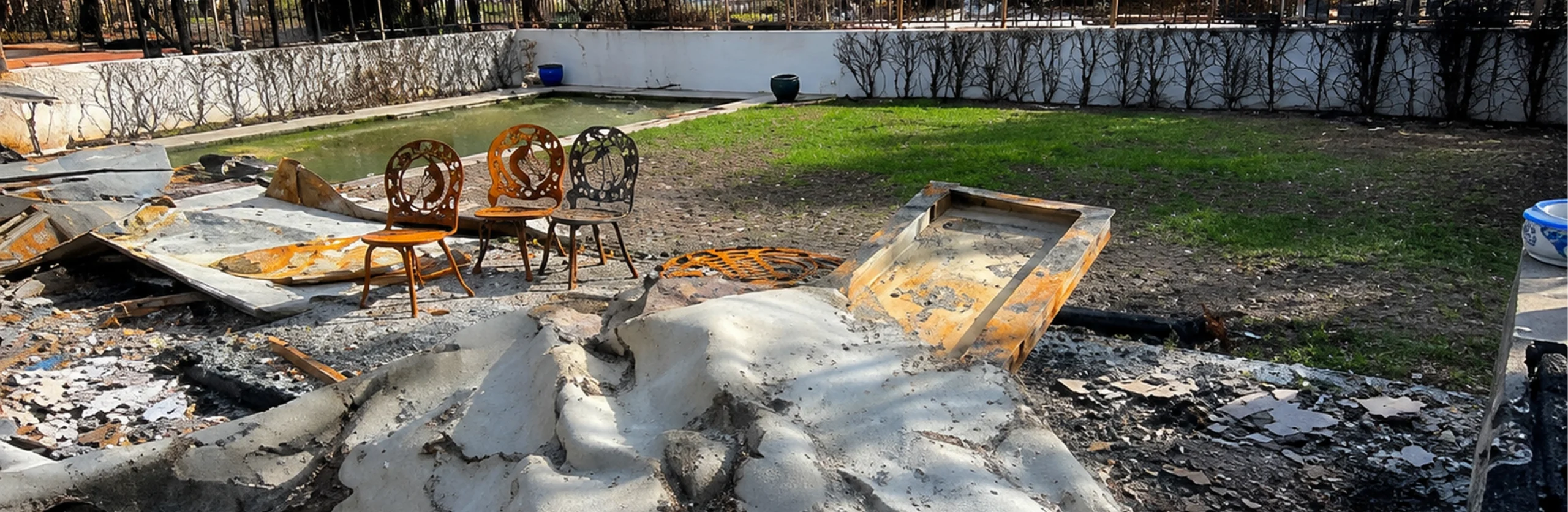
After a residence in the Pacific Palisades fire zone was almost entirely destroyed, the insurer faced a practical question: which surviving concrete foundation elements had been structurally compromised by wildfire, and which could be repaired and returned to service? The distinction carried significant cost implications for reconstruction.
The remaining structure included a crawl space foundation supported by concrete piers and perimeter stem walls, a garage slab-on-grade, and a 120-foot concrete retaining wall along the property’s east edge.
YA Group’s Approach
Our team of experts conducted a site visit and performed a visual assessment of the conditions at the site at several locations, supplemented by nondestructive testing (NDT), including sounding and ultrasonic pulse velocity (UPV) testing. This combination of field observations and quantitative testing allowed the team to efficiently assess the condition of the remaining concrete components without destructive testing, providing objective data to support their findings.
Data That Cuts Through the Uncertainty
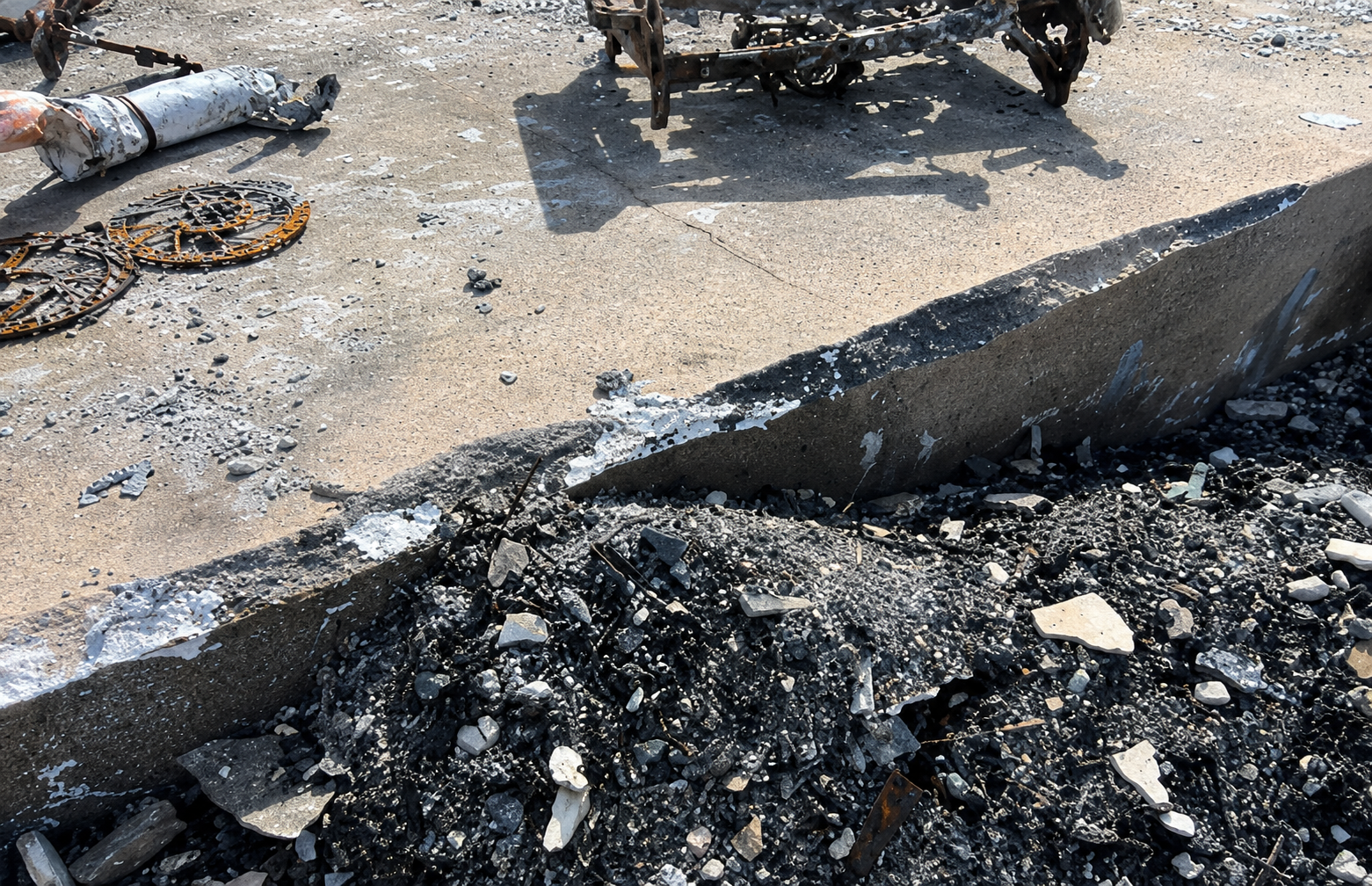
The concrete stem walls and piers exhibited signs of heat damage, including spalls, cracks, pink-to-buff discoloration, and a chalky surface texture. UPV testing further confirmed deterioration, with average pulse velocities falling below the typical thresholds for sound concrete. The garage slab-on-grade and retaining wall, however, presented a different story. Although both exhibited surface soot, and the retaining wall’s decorative coating was damaged, neither exhibited evidence that the structural integrity of the concrete had been compromised.
By distinguishing heat-damaged components from structurally sound ones, YA Group provided the insurer with more than a damage assessment. We delivered a defensible, evidence-based scope of repair that clearly identified what required replacement and what could be returned to service. The stem walls and piers were determined to require replacement. Additional testing was recommended to verify the condition of the garage slab before making a replacement decision, while the retaining wall was cleared to return to service following minor cleaning and localized patch repairs.
The result was a reconstruction scope grounded in data rather than assumptions, giving the insurer confidence in every line item and a clear path forward.