


The Challenge
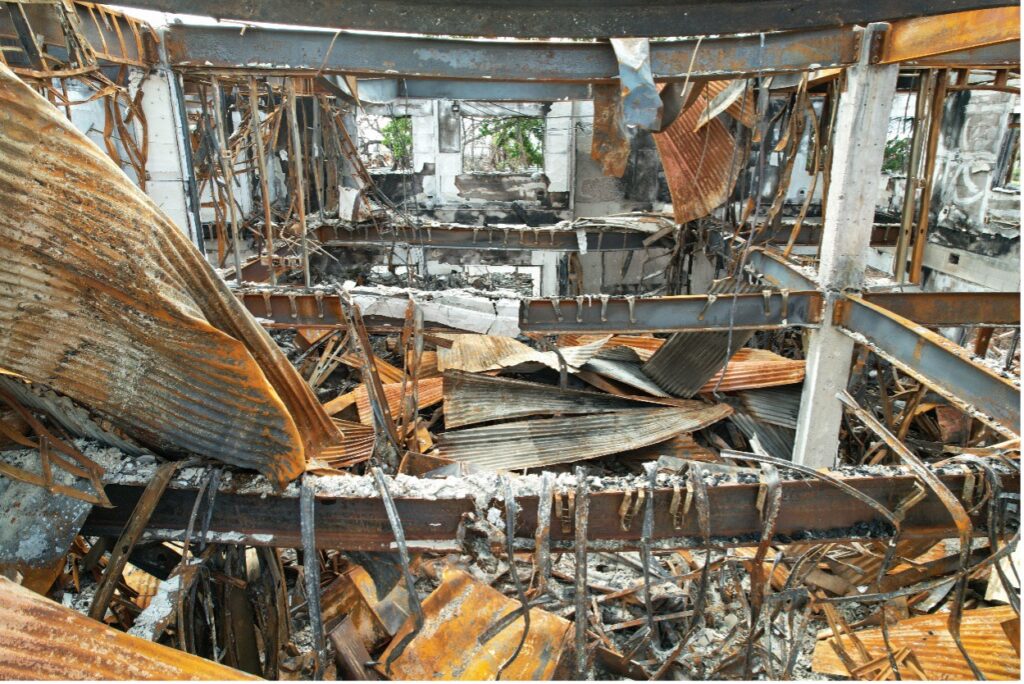
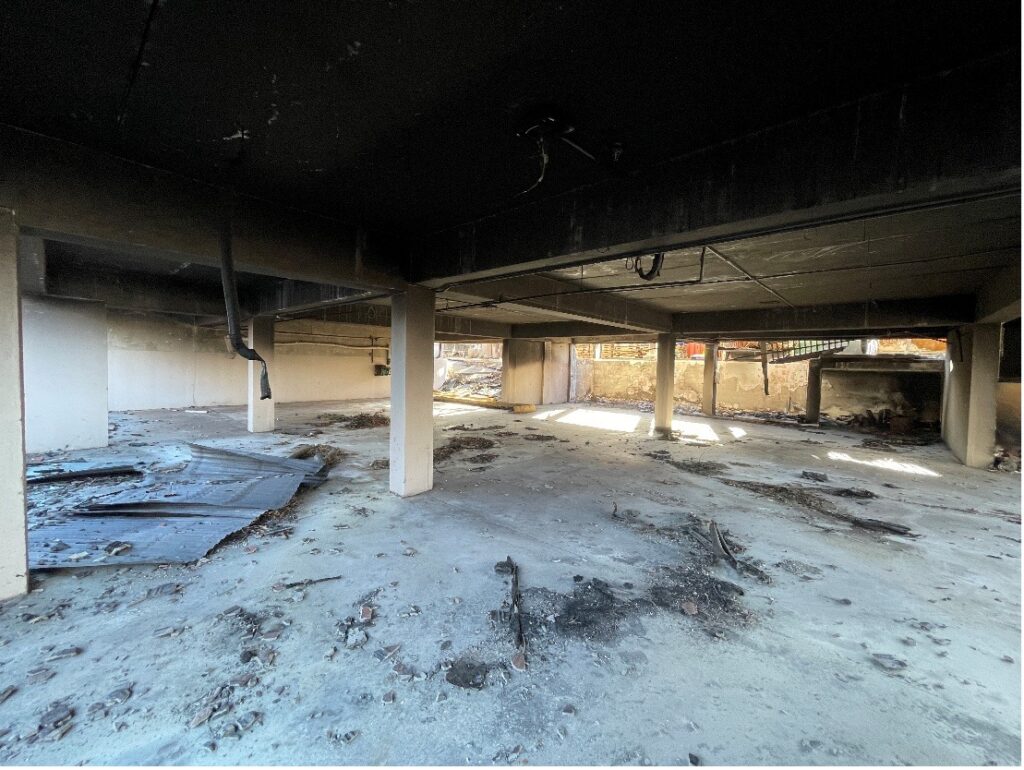
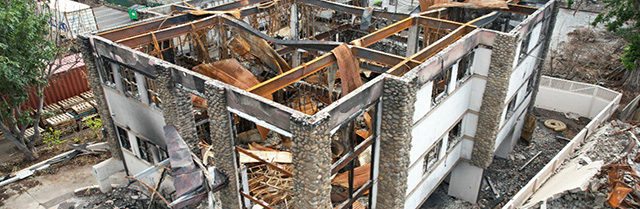
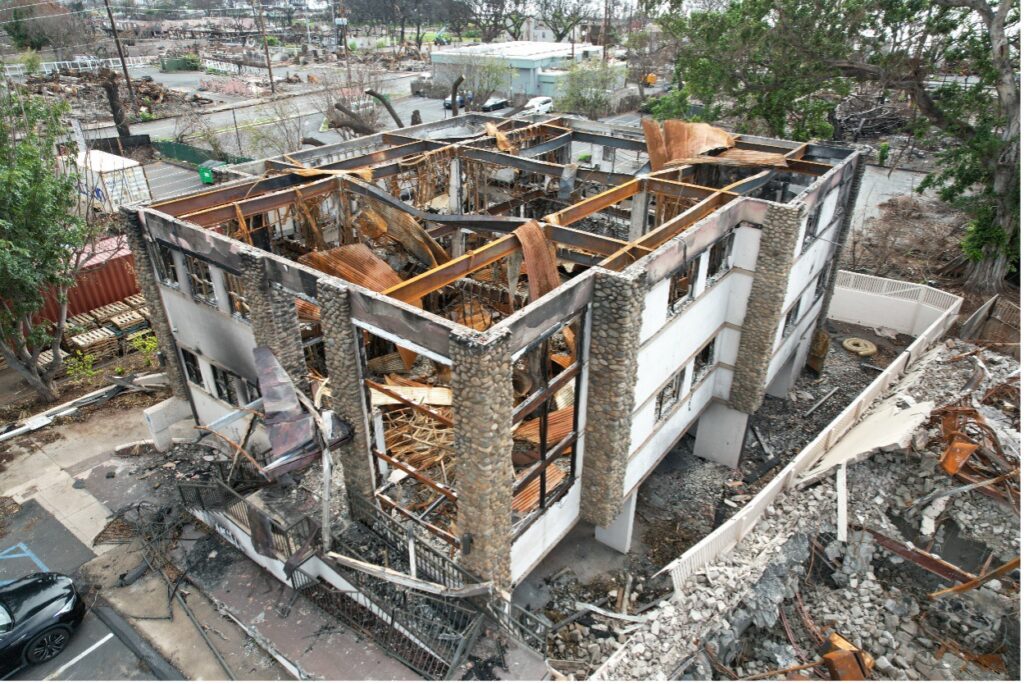
The 2023 Lahaina fires destroyed more than 2,200 structures, including this commercial building, which was located directly in its deadly path. The fire significantly damaged the structure’s interior framing and destroyed the roof and floor framing, while the resulting debris blocked access to the building’s interior. What remained of the structure consisted only of the exterior walls and an elevated concrete slab supported by concrete columns which formed the parking level.
The insurer needed to determine whether these surviving concrete building components had been structurally compromised by heat exposure or whether they could be repaired and returned to service to support the reconstructed building.
The Approach
Working carefully around the collapsed framing and debris surrounding the building, YA Group’s Engineering Services team assessed the general condition of the remaining building components by performing a visual inspection of the structure and conducting nondestructive testing (NDT). To further evaluate the condition of the concrete and determine whether it had sustained fire-related damage, the team extracted several concrete core samples and sent them to YA’s material scientists for petrographic analysis.
What the Data Showed
YA’s NDT yielded mixed results that raised questions about the quality of the concrete at various locations, illustrating the importance of collecting multiple core samples for petrographic analysis. While YA determined that the concrete was, in general, minimally affected by the wildfire, our analysis also indicated that the original concrete quality was inadequate to support a newly reconstructed building.
The Outcome
Concrete testing revealed that although the fire damage was superficial, the quality of the concrete used during the original construction ranged from marginal to poor. As a result, YA Group determined that the concrete elements were not suitable for repair and reuse to support a new reconstructed building.